
Share this
by Dairy Business Association on Jun 18, 2026, 10:45:47 AM
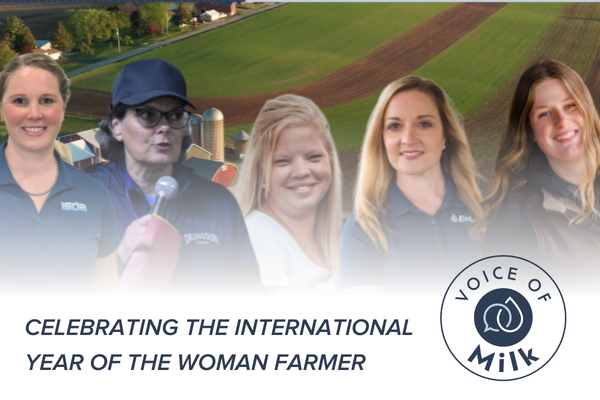
In honor of the International Year of the Woman Farmer, we’re celebrating the women who are shaping the future of agriculture through leadership, innovation and advocacy. In this article, five dairy farmers from the Voice of Milk organizations share their experiences, the challenges they’ve encountered, the progress they’ve made and their passion for the dairy community. Their stories highlight the important role women play in agriculture today and the lasting impact they continue to make for future generations.
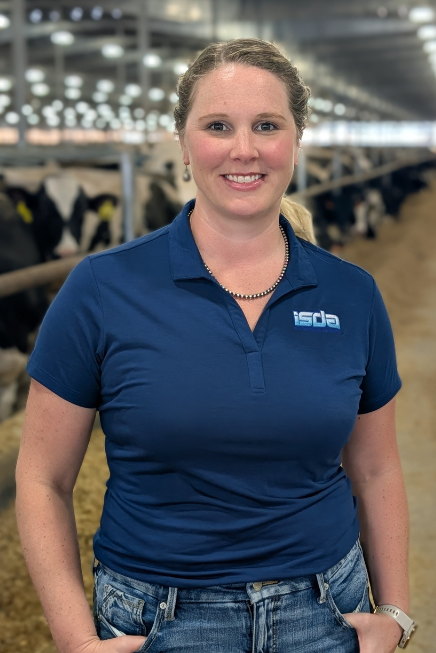
Christina Zuiderveen
Black Soil Dairy, Iowa
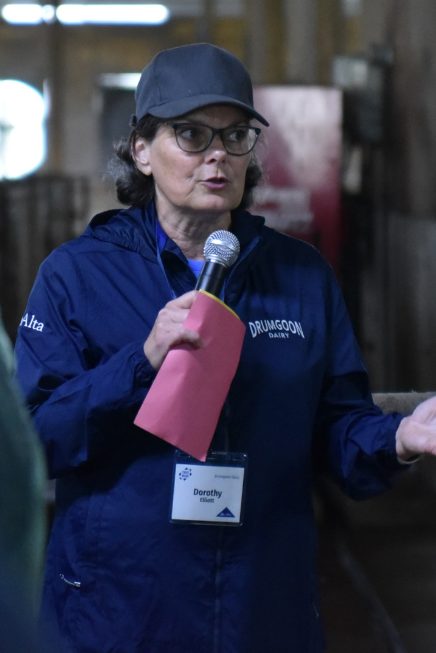
Dorothy Elliot
Drumgoon Dairy, S.D.
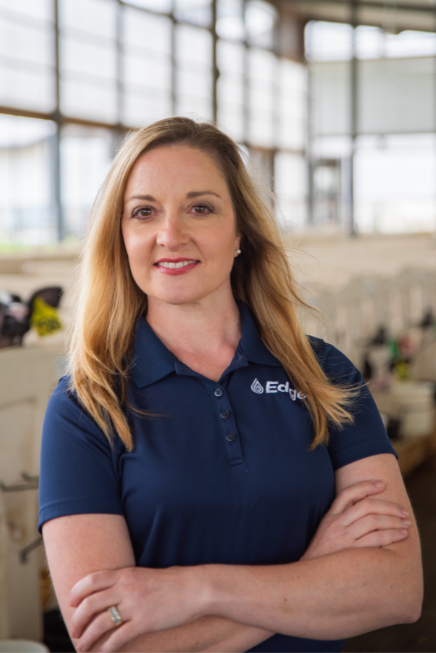
Heidi Fischer
Fischer Clark Dairy, Wis.
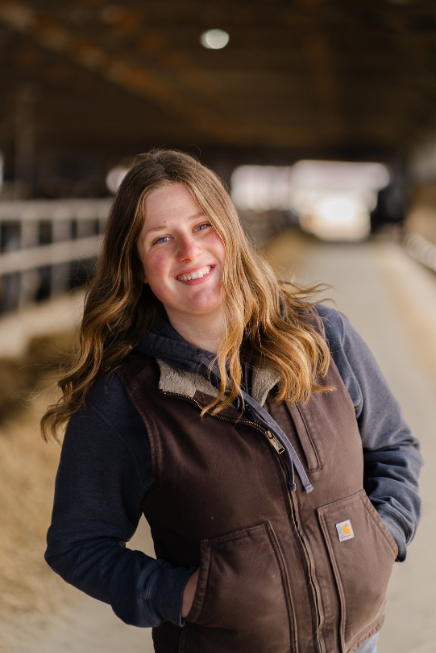
Kate Minten
Spadegenske Dairy, Minn.
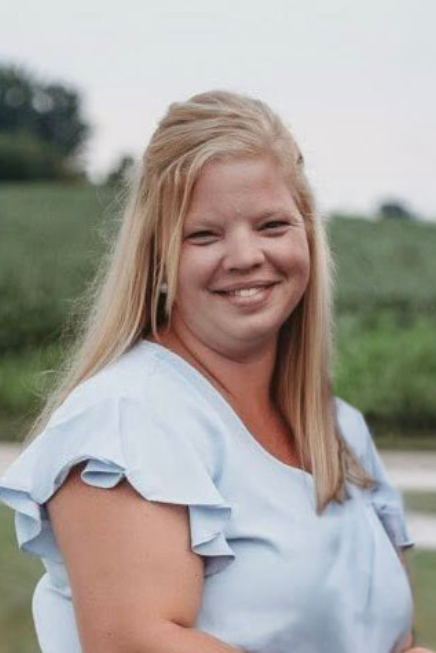
Kelly Oudenhoven
Larrand Dairy, Wis.
A Passion for Dairy
For many dairy farmers, what begins as a job quickly becomes a way of life. Whether it’s caring for cattle, working alongside family members or learning from fellow producers, each woman described a different aspect of the industry that keeps her passionate about dairy farming.
What do you love most about working in the dairy industry?
Christina: Connectivity and collaboration. The dairy industry is a close-knit group, and they are quick to help one another out. We love to share our experiences and show other dairy farmers around our places. I can’t tell you how many dairies I have toured, and yet I learn something every time. While we may compete for land or other resources, in general, we are all on the same team and are happy to share ideas or engage in conversations to help solve problems.
Dorothy: I was brought up on a mixed farm in County Fermanagh, Northern Ireland. I did my fair share of milking cows and feeding calves. What I love most about working in the dairy industry has changed over the years. It allows me to work alongside my husband and my son. I worked for 25 years in the health care industry, and I also worked as an industrial representative. I have been able to transfer those skills over to our family business.
Heidi: I love that we have a hive mindset. Always sharing our ideas (and failures) and learning from each other. Even though each of our farms is different, and we have different practices or theories that best suit our own businesses, we still share what worked and what didn’t. And we want to hear what the next farm is doing. The ability to improve your own dairy or business is sometimes just a conversation away.
Kate: I think an easy answer for me is the cows. If I didn’t love the cows, I would not wake up every morning to pursue a life in the dairy industry. I also really love and appreciate the community that the dairy industry has given me. Everybody knows everyone in some sort of away. And we’re all in it for the same passion. It’s a tight community that’s willing to support everybody no matter what. We all understand why we love what we do, and that’s what makes it special.
Kelly: While there are many things that I love about working in the dairy industry, my favorite is, by far, working with the cows and being part of their story. Watching the circle of life, from them being born and getting to take care of them their entire life, for them to give back to us is pretty rewarding. The only thing better than that is being able to share this with my husband and children who are all active on the farm.
Sharing Agriculture’s Story
As fewer people have direct connections to farming, the need for dairy farmers to share their experiences and perspectives has never been greater. From influencing policy decisions to helping consumers understand how their food is produced, advocacy remains a critical part of protecting the future of dairy farming.
Why is it important for all dairy farmers to have a voice in dairy advocacy?
Christina: Something beautiful about the industry is that with the shared goal of producing high-quality milk, there are so many ways to do it. Variances that come out of location, climate, available feed sources, regional processing capacity, etc., mean there are a lot of opinions on what is best for the industry. We need to hear all these voices to come up with ideas and solutions that benefit as many dairies as possible.
Dorothy: Historically, women have played a major role in dairy farming, but their contributions were often overlooked or minimized. Gladly, the role women play in dairy advocacy is changing. I also think that women offer an additional perspective for animal care. I want to make sure to advocate for the cows when looking at overall cow comfort.
Heidi: It used to be that most people had exposure to a farm, either through grandparents or by growing up on one themselves. However, that is now multi-generations removed. And what is happening in rural areas may not be realized in an urban setting or at the policy level. We have stories and experiences to share that could impact the direction of a new policy or even a requirement. Farmers have always been natural problem solvers, so it makes sense to be a part of the conversation.
Kate: We all have a story to tell. It doesn’t have to be anything big or complicated. Our story can be as simple as sitting around a table after church, telling our neighbor what we did over the week. Any way we can bridge the gap between our own communities and our family farms, even in the smallest of ways, allows us to advocate for the cows, industry, and dairy products that we all love so much, and helps people understand the story behind their food.
Kelly: I feel it is important for dairy farmers to have a voice in dairy advocacy, as it is our future at hand. With only 1% of the population being farmers and growing food for the world, we have to have a voice when it comes to regulations that are set forward by people who sometimes don’t have any experience with agriculture at all. We need to make sure we are protecting not only the future of our dairy farms, but also the industries that help us be successful, such as milk haulers, processors and so much more.
Encouraging the Next Generation
The future of dairy depends on the next generation of leaders, innovators and caretakers. When asked what advice they would give young women interested in dairy farming, these farmers emphasized confidence, perseverance, lifelong learning and the importance of finding opportunities that match individual strengths and interests.
What advice would you give to young women interested in dairy?
Christina: Get involved. I grew up in dairy and was certain that I was not going to remain in the industry, but I fell in love with a dairy farmer. At this point, I still had not really thought much about being actively involved in the industry. I did a bit when my kids were young and found the things I enjoyed, and as they got older, I slowly got involved in more things. Dairy is so much more than just cows. If you love the cows, get involved with animal care, but if you don’t, think about technology. You could integrate robotics, genetics, science, nutrition, processing, welding, plumbing, etc. The possibilities are endless, cast a wide net and find the right fit for you!
Dorothy: If you love what you do, do it the best you can, and you will succeed. It also depends on where you are starting from. I think many college graduates go into jobs in the industry rather than looking for opportunities on the farm. For women who don’t see an opportunity to farm with their own family, look for a job on a farm that you know or admire and hone your skills and knowledge in your chosen field. For women who have already been farming on their own but aren’t able to continue due to limitations, either financially or resource-wise, partner up with another farm. There are lots of opportunities to continue working in agriculture, either with larger farms or older farmers who need some youth and energy to invest in their operation.
Heidi: Surround yourself with people that make you want to grow. The more you keep challenging yourself the more you will give yourself the room to grow, to try new things and to give yourself the grace to fail (and learn from the failures!) You won’t find yourself in a rut, bored or frustrated. A challenge won’t be met with exhaustion or frustration, but with a winning attitude and the want to succeed. Plus, you’ll have those people around you to encourage you, talk through what didn’t work, and they will be there to celebrate the wins.
Kate: Be confident in your strengths! I think it’s easy to say that girls can do everything that the boys can do, and there’s a lot of truth to that. But I also think girls bring a lot to the table. I’m able to do field work right alongside my brothers, but I also am confident that when it comes to the calves and the cows, my patience and love goes a little deeper than theirs. I see it in the little things, like taking extra time with a calf that needs it or noticing when something’s just a little off. Don’t be afraid to go jump in and be one of the boys, but also be confident in the fact that you are a girl, and there’s a lot of value in that too; don’t lose that.
Kelly: Advice I would give to younger women that are interested in farming is to just do it. If you are truly entering into dairy farming for the long haul, it is one of the most rewarding lifestyles you can have. But be prepared to put in the work. While the women who have gone before us have blazed quite the trail, there will always be the need to work harder to prove yourself. Never stop learning. But also give yourself grace and remember self-love when it comes to the hard days. Find your tribe and lean on them when you need to.
Leaving a Lasting Impact
Beyond milk production, dairy farms contribute to their communities in countless ways. Whether through employee development, advocacy, education or community involvement, these women hope to leave a legacy that extends far beyond their farm gates.
What kind of impact do you hope to leave on your farm or in your community?
Christina: A lot of the work I do in our operations has to do with employees, housing, visas, etc. We have goals of being a premier employer, not just by benefits offered to employees, but by creating a healthy work environment where employees and their families can grow and thrive. If we achieve this goal on our farm, then the product of that will spill over into the community. We have long-term employees, not just people passing through. They become part of the community and contribute in their own way. I do not expect the children of my employees to want to work on the dairy long term, but I would be proud to see them stay in our community and live and work there. Seeing this would be confirmation that we are achieving this goal.
Dorothy: I hope that the impact I leave will be a positive one on both the farm and our community. We take our social license to dairy farm very seriously; it’s not a given right. We partner up with local crop farmers, businesses and communities on a daily basis. We enjoy hosting tours of children, local families and groups both internationally and nationally on the farm. We love what we do and therefore aspire to do our best for our animals, our employees and our community. Recently, we had an I-9 audit of our employees, and I advocated on their behalf because there is so much silence on the issue of dairy workers and immigration. I am
grateful for each and every one of our 55 employees. They do a difficult job, 12 hours a day, through the night and in very unpleasant conditions at times. They battle extreme cold and heat as well as snow and ice. Most of our employees are visa workers, but some are not; they are all great employees because otherwise I would not keep them on as workers on our farm. Sometimes you have to stand up and be counted when others can’t stand up for themselves.
Heidi: In my community, I hope to leave the same impression – we can all play a part in bringing a community together. Some can donate time, resources, or financial assistance. Every little bit helps. Having the local school out to tour may inspire a child to get into the agriculture field that would otherwise never have seen a farm or understand how milk gets from the cow to their fridge at home. Or donating funds to provide milk at a local event or volunteering to serve at a local June Dairy Breakfast. We all experience being in different seasons in our life, where donating time is the only thing you can afford to do! Or kids and family (and a farm) can make life busy – so writing a check works too.
Kate: I want my community to understand that my early mornings aren’t a chore, they’re a passion. I want people to see the love and care I have for the animals I’m raising and that it reflects the same drive other dairy farmers have. When it comes to my impact on my own farm, I want people to see the joy in what I do every day, even on the days when it’s hard and I don’t really want to be there, because that’s when it matters most.
Kelly: The impact I hope to leave is one of positivity. I hope that people know that I have worked hard, that we are good stewards of the land and cows, and that we are respectable, honest and fair people. Mental attitude is big on our farm and being positive even in the hardest situations is a choice that we always try to make.
Looking Ahead
The women featured in this roundtable represent the many ways women contribute to modern dairy farming. Through leadership, innovation, advocacy and stewardship, they are helping ensure a strong future for their farms, their communities and the dairy industry as a whole. Their stories serve as a reminder that while agriculture continues to evolve, the dedication and determination of women farmers remain a constant force driving the industry forward.
Listen to Dairy Stream to hear more from these women and how they’re shaping their farm and their communities.